New York City walking route

Central Park South to Reservoir Walk.

A practical Central Park route from the south edge through The Mall, Bethesda Terrace, Bow Bridge, Belvedere Castle, and the Reservoir โ€” built for visitors who want the park to feel like a route, not a giant green guessing game.

Abstract Central Park walking route texture
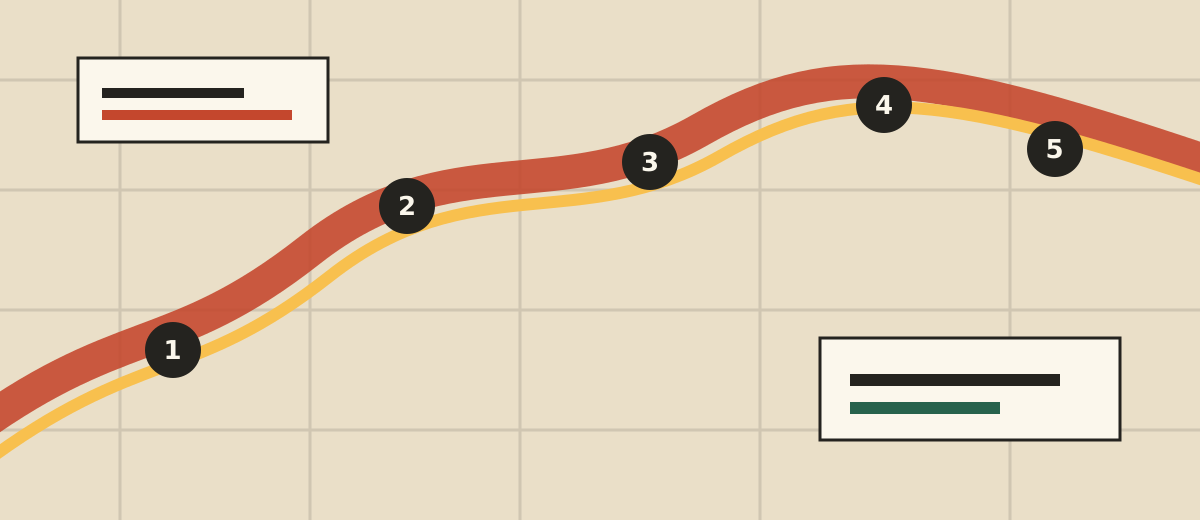
1 The Pond 25 min
2 The Mall 35 min
3 Bethesda Terrace 40 min
4 Bow Bridge 25 min
5 Reservoir 45 min
4.6 mi

Route snapshot

A park route with a beginning, middle, and mercy.

Central Park is easy to enter and surprisingly easy to under-plan. This walk gives you a clear south-to-north arc with recognizable landmarks, flexible exits, and enough structure to avoid wandering until your shoes file a complaint.

Basic details

  • Distance: about 4.6 miles
  • Walking time: about 3.5 to 4 hours with pauses
  • Route type: scenic park route, landmarks, bridges, views, museum-adjacent planning
  • Best for: first-time NYC visitors, Central Park orientation, Midtown stays, Upper West Side / Upper East Side hotel logic

Start and finish

  • Start: Central Park South / The Pond area
  • Finish: Jacqueline Kennedy Onassis Reservoir area
  • Easy exits: after The Mall, Bethesda Terrace, Bow Bridge, or Belvedere Castle
  • Good add-ons: The Met, American Museum of Natural History, Upper West Side dinner, Upper East Side hotel return

Reality check

This is not live GPS guidance, an official park map, a safety guarantee, or a promise that every path, restroom, attraction, or crossing is currently open. Use official park resources and current conditions before relying on any route.

Decision filter

Choose this walk if you want Central Park to behave.

The park is enormous by visitor standards. This route gives it structure before it turns into a beautiful leafy side quest with no exit strategy.

Choose it if

  • ๐Ÿ“ You want one strong Central Park route.
  • ๐Ÿ“ You are staying near Midtown, Central Park South, the Upper West Side, or the Upper East Side.
  • ๐Ÿ“ You want landmarks without trying to see the entire park.
  • ๐Ÿ“ You want a scenic walking day with museum add-on potential.

Skip it if

  • ๐Ÿ“ You only have 30โ€“45 minutes.
  • ๐Ÿ“ You want Times Square, shopping, or downtown NYC instead.
  • ๐Ÿ“ Heavy rain, snow, heat, or wind makes a long park walk annoying.
  • ๐Ÿ“ You need a fully accessible route verified against current conditions.

Shorten it if

  • ๐Ÿ“ You mainly want The Mall and Bethesda Terrace.
  • ๐Ÿ“ You are walking before a museum visit.
  • ๐Ÿ“ You have kids, luggage timing, or dinner plans.
  • ๐Ÿ“ Someone says โ€œletโ€™s just keep goingโ€ with dangerous optimism.

Stop-by-stop route

From city edge to reservoir calm.

The route begins at the south edge, moves through the parkโ€™s classic central landmarks, crosses the romantic bridge zone, then climbs toward the Reservoir for a broader, quieter finish.

Route order

  1. 1. Central Park South / The Pond
  2. 2. The Mall
  3. 3. Bethesda Terrace & Fountain
  4. 4. Bow Bridge
  5. 5. Belvedere Castle
  6. 6. Jacqueline Kennedy Onassis Reservoir
1

Start: Central Park South / The Pond

Start from the south edge of the park near Central Park South and The Pond. This gives you the sharpest transition from Manhattan intensity into trees, paths, water, and park rhythm.

What to notice: the sudden city-to-park shift, skyline edges, water reflections, and whether your group wants a relaxed pace or landmark-hunting mode.

25 min
2

The Mall

Continue north toward The Mall, one of the parkโ€™s clearest โ€œyes, this is the famous partโ€ walking corridors. It gives the route structure, shade, people-watching, and a strong sense of arrival.

What to notice: the formal promenade, tree canopy, benches, performers, and the way the path naturally pulls you toward Bethesda.

35 min
3

Bethesda Terrace & Fountain

Use Bethesda Terrace as the main pause point. This is the routeโ€™s civic-theater moment: stairs, arches, fountain, lake views, performers, crowds, and the sense that Central Park briefly decided to become an opera set.

What to notice: terrace levels, tilework, fountain views, crowd movement, and whether this should be your turnaround point.

40 min
4

Bow Bridge

Continue toward Bow Bridge for one of the parkโ€™s strongest photo-and-view payoffs. This stretch turns the route from formal promenade into lake-edge wandering, but still keeps a clear direction.

What to notice: lake views, bridge curves, skyline fragments, and the temptation to drift endlessly into pretty side paths.

25 min
5

Belvedere Castle

Head toward Belvedere Castle when you want a higher-view reset and a stronger sense of the parkโ€™s interior geography. This is a good checkpoint before deciding whether to continue to the Reservoir.

What to notice: elevation change, stone texture, lookout angles, and how much walking energy is still available in the group bank account.

35 min
6

Finish: Jacqueline Kennedy Onassis Reservoir

Finish at the Reservoir for a wide, calm ending after the denser landmark stretch. This is where the route stops feeling like sightseeing and starts feeling like a proper walking day.

What to notice: open water, skyline rim, longer sightlines, and whether to exit east, west, or continue into further park wandering like a brave little chaos pilgrim.

45 min

Shorter version

The 75โ€“90 minute version.

Use this if the full route is too much

Start at Central Park South, walk through The Mall, pause at Bethesda Terrace, then exit near the east or west side instead of continuing to Bow Bridge, Belvedere Castle, and the Reservoir.

Short route sequence

  1. 1. Central Park South / The Pond
  2. 2. The Mall
  3. 3. Bethesda Terrace & Fountain
  4. 4. East or west side exit

Best use case

This version works best before a museum visit, after hotel check-in, with kids, or on a day when you want Central Park flavor without accidentally becoming an unpaid park ranger.

Nearby stay logic

Where to stay if Central Park matters.

This is not a hotel ranking. It is route logic. The best zone depends on whether you want to start easily, finish easily, or pair the park with museums, restaurants, or Midtown plans.

Central Park South / Midtown

Best if you want the easiest start near the south edge of the park and also need access to Midtown hotels, theaters, shopping, or transit. This zone makes the beginning of the route simple.

Upper West Side

Best if you want a calmer neighborhood feel, good museum access, and easier exits after Bow Bridge, Belvedere Castle, or the Reservoir. Strong choice if your day leans park-heavy.

Upper East Side

Best if you want museum pairing, quieter hotel-zone logic, or an east-side exit after the Reservoir. This works especially well if The Met or Museum Mile is part of the same travel day.

Columbus Circle

Best if you want a practical park-edge starting point with strong transit, dining, and Midtown access. It is a clean base for travelers who want Central Park without being fully absorbed by it.

Practical notes

Park walking is still city walking.

Central Park feels separate from Manhattan, but your route still depends on weather, crowds, restroom planning, path choices, and exit strategy. The trees do not handle logistics. Lazy trees.

Weather

Rain, heat, snow, ice, and wind can make a long park route feel much longer. If conditions are rough, use the shorter version and keep the Reservoir optional.

Crowds

Bethesda Terrace, The Mall, Bow Bridge, and south-park entrances can get crowded. Crowds do not ruin the route, but they change the pace. Move like water, not like an offended spreadsheet.

Exits

Decide your exit before you start. South, east, west, and north exits all create different hotel, subway, museum, and dinner outcomes. Wandering is charming until dinner reservations develop teeth.

FAQ

Central Park questions before the squirrels unionize.

How long does this Central Park walk really take?

Plan for about 3.5 to 4 hours if you walk from Central Park South to the Reservoir with pauses. If you mainly want The Mall and Bethesda Terrace, use the shorter 75โ€“90 minute version.

Is this a full Central Park route?

No. Central Park is too large for a casual โ€œsee everythingโ€ route. This page gives a practical south-to-Reservoir route with recognizable landmarks and clean decision points.

Is this good before or after a museum?

Yes, but choose the route length carefully. The shorter version pairs better before a museum visit. The full route works better when Central Park is the main activity.

Can I do this with kids?

Possibly, but the full route may be long. Use the shorter version, build in bathroom and snack stops, and avoid treating the park like a military campaign with ducks.

Is it wheelchair or stroller friendly?

Some park paths may be manageable, but grades, surfaces, closures, weather, crowds, and route choices can affect access. Check current official accessibility resources and maps before relying on this route.

Where should I stay if I want to do this route easily?

Central Park South, Columbus Circle, the Upper West Side, and the Upper East Side all work depending on whether you want the easiest start, museum pairing, calmer exits, or Midtown convenience.

Disclosure

Informational route, not live navigation.

Not a tour operator

Walkmark is an informational route-planning site. It does not operate tours, provide guides, manage attraction access, sell transportation, or provide real-time navigation.

Conditions change

Paths, restrooms, park access, crossings, transit, safety conditions, and weather can change. Confirm details with official sources before relying on any route.

Partner links

Some Walkmark pages may include partner or affiliate links where they help with travel planning. If those links are used, the site may earn a commission at no extra cost to the visitor.